Tag: Featured

Use this description to tell users what kind of blog posts they can find in this tag.

  • The Role of Snipers in the Winter War

    The Role of Snipers in the Winter War

    In the Winter War (1939–1940), the Finnish sniper was more than just a marksman; they were a central pillar of a psychological warfare strategy known as Motti tactics. While the Soviet Red Army relied on massive numbers and heavy artillery, the Finnish “ghosts” used the environment to paralyze an empire.

    Here is how snipers shaped that conflict:


    1. Force Multipliers in “Motti” Warfare

    Finland was outnumbered roughly 3-to-1 in manpower and 100-to-1 in tanks. To survive, the Finns used Motti tactics—breaking long Soviet columns into smaller “pockets” (mottis) and then picking them apart.

    • Isolation: Snipers were used to take out officers, commissars, and radio operators first.
    • Paralysis: Without leadership, the stranded Soviet soldiers were often too terrified to move, making them easy targets for Finnish guerrilla squads.

    2. The Weaponization of the Arctic Environment

    The Finnish sniper was a product of the land. Most were world-class hunters and skiers who viewed the $-40$°C forest not as a hostile environment, but as their home.

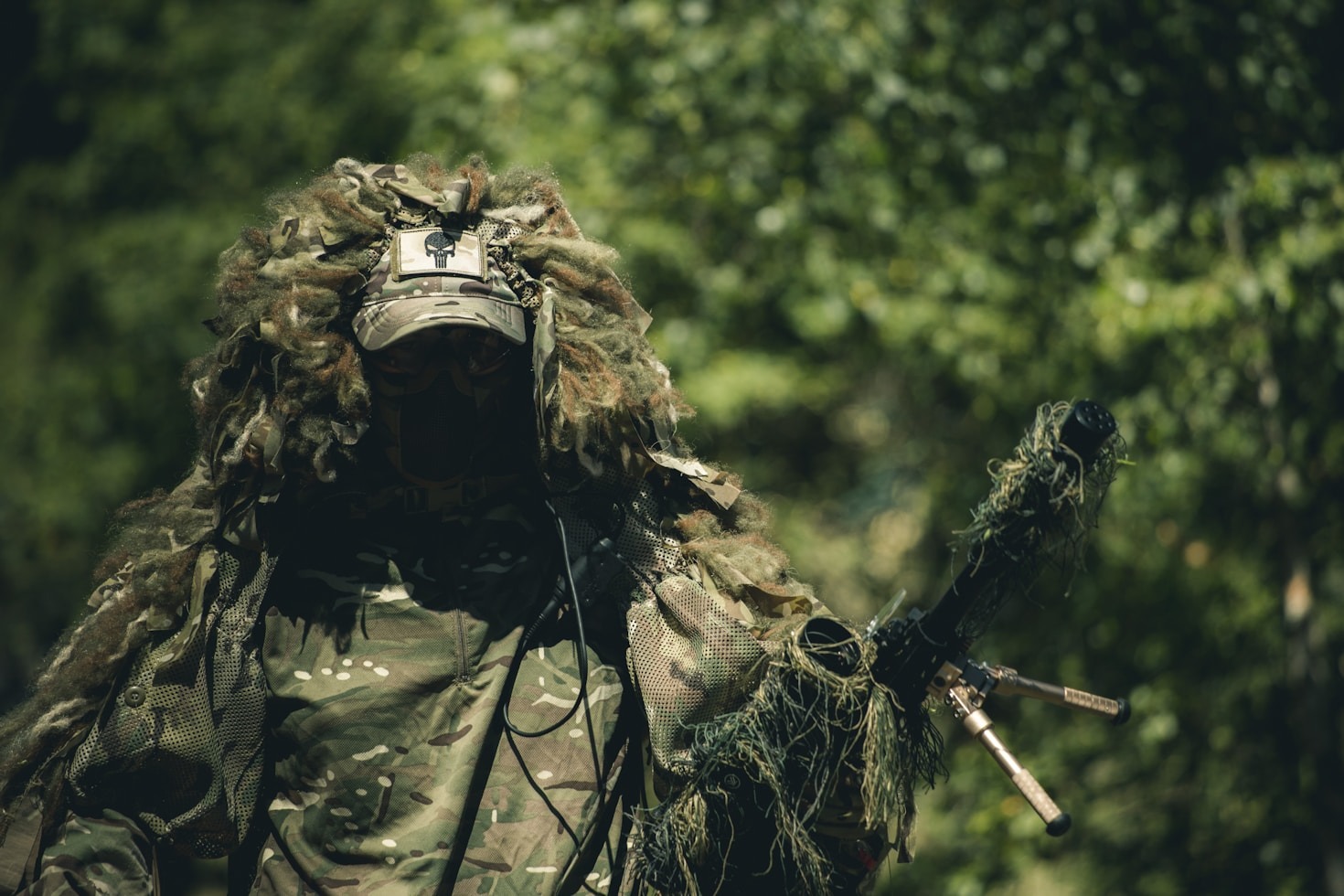
    • White Camouflage: While Soviet soldiers initially wore dark olive uniforms that stood out against the snow, Finnish snipers wore specialized white capes and hoods.
    • Ski Mobility: Snipers utilized cross-country skis to strike from one flank, disappear into the woods, and reappear a mile away on the other flank within the hour. This created the illusion of a much larger force.

    3. Psychological Terror: “The Ghost Forest”

    The role of the sniper was as much about mental exhaustion as it was about casualties.

    • No Safe Zone: Because Finnish snipers like Simo Häyhä could hit targets from 400+ meters without a scope, Soviet soldiers never felt safe, even deep behind their own lines.
    • Sleep Deprivation: Snipers would often target soldiers trying to gather wood for fires. This forced the Soviets to stay in the dark and cold, leading to widespread frostbite and a total collapse of morale.

    4. Technical Superiority in Extreme Cold

    The Winter War proved that high-tech gear isn’t always better. The Finns utilized the Mosin-Nagant (specifically the Finnish M/27, M/28, and M/28-30 variants).

    • Bolt-Action Reliability: These rifles were rugged and functioned perfectly in the deep freeze that jammed more complex Soviet semi-automatic weapons.
    • Iron Sights vs. Optics: Finnish snipers frequently avoided scopes. Beyond the risk of lens flare, iron sights allowed them to keep their heads lower to the ground, reducing their profile to a mere few inches above the snowbanks.

    5. Counter-Sniper Operations

    The Soviet Union eventually realized the threat and deployed “Sniper-Exterminator” units. This turned the Finnish forests into a deadly game of cat-and-mouse.

    • Decoys: Finnish snipers would use helmets on sticks or mannequins to draw Soviet fire, revealing the enemy’s position.
    • Artillery Response: The Soviets became so desperate to stop Finnish snipers that they would often carpet-bomb entire sections of the forest with artillery just to eliminate a single suspected shooter.

    The Result

    The role of the sniper in the Winter War was so effective that it fundamentally changed Soviet military doctrine. After the war, the USSR realized they had neglected individual marksmanship and began the massive sniper training programs that would eventually produce legends of their own during World War II.

    For the Finns, the sniper became a symbol of Sisu—the ability to face overwhelming odds with quiet, lethal persistence.
  • Lessons from the Life of Simo Häyhä

    Lessons from the Life of Simo Häyhä

    The life of Simo Häyhä offers more than just military history; it provides a blueprint for discipline, humility, and the power of specialized knowledge. While his context was one of extreme conflict, the principles he lived by are remarkably applicable to personal and professional mastery.

    Here are the key lessons we can draw from the life of “The White Death.”


    1. Mastery Over Gear

    In an era where people often seek the “latest and greatest” technology to solve problems, Häyhä did the opposite. He used an outdated rifle with iron sights while his enemies had modern scopes.

    • The Lesson: Tools are secondary to talent. Mastery comes from knowing your equipment so well that it becomes an extension of yourself. It is better to be a master of a simple tool than a novice with a complex one.

    2. The Power of Preparation

    Häyhä’s success in the 100-day Winter War was actually the result of decades of quiet preparation. His years as a hunter taught him how to track, how to stay still, and how to read the forest.

    • The Lesson: “Luck” is often just the intersection of preparation and opportunity. When the crisis arrived, Häyhä didn’t have to learn new skills; he simply applied his lifelong habits to a new environment.

    3. Attention to the “Micro-Details”

    Häyhä’s survival didn’t depend on grand gestures, but on tiny adjustments: packing down the snow to prevent a puff of powder, or keeping snow in his mouth to hide his breath.

    • The Lesson: In any high-stakes environment, the “small” things are actually the “big” things. Success is often found in the margins—the 1% details that others are too lazy or distracted to manage.

    4. Adaptability is Survival

    The Finnish army was dwarfed by the Soviet Union in numbers and heavy machinery. Häyhä and his compatriots used Sisu (Finnish stoic determination) and guerrilla tactics to turn the environment into a weapon.

    • The Lesson: You don’t need the most resources to win; you need to be the most adaptable. Use your “smallness” or lack of resources as an advantage to be more mobile, stealthy, and efficient than a “larger” competitor.

    5. Humility in Achievement

    Despite being the most successful sniper in history, Häyhä never sought fame. After the war, he returned to a quiet life of farming and hunting. When asked about his record, he attributed it simply to “practice” and “duty.”

    • The Lesson: Let your work speak for itself. True greatness doesn’t require self-promotion. There is a profound dignity in doing a difficult job well and then returning to a state of peace without the need for constant validation.

    6. Resilience (Sisu)

    Häyhä survived a devastating injury that would have ended most people. He woke up from a coma, underwent 26 surgeries, and lived another 62 years. He didn’t let his “worst day” define the rest of his life.

    • The Lesson: Resilience isn’t just about surviving the blow; it’s about what you do after you wake up. Häyhä’s long life after the war proves that one can move past trauma and find purpose in the quiet years that follow.

    “I did what I was told to do, as well as I could. There would be no Finland unless everyone else had done the same.” — Simo Häyhä

  • How Simo Häyhä Became a Sniper Legend

    How Simo Häyhä Became a Sniper Legend

    The legend of Simo Häyhä isn’t just a story of marksmanship; it is a masterclass in adaptation, patience, and the home-field advantage. His transformation from a humble farmer into “The White Death” was a perfect storm of pre-war preparation and the brutal realities of the 1939 Winter War.

    Here is the breakdown of how he achieved legendary status.


    1. The Foundation: A Life Outdoors

    Before he ever saw a battlefield, Häyhä was a farmer and an avid hunter in the rugged Finnish wilderness near the Russian border.

    • The Civilian Marksman: He joined the Finnish Civil Guard at age 20, where he spent years refining his shooting skills.
    • Competitive Edge: He was known for winning local shooting competitions, often outperforming professional soldiers. His home was filled with trophies for marksmanship long before the war began.

    2. Mastery of the “Iron Sights”

    One of the primary reasons Häyhä became a legend was his rejection of modern technology. While Soviet snipers relied on the PE or PEM telescopic sights, Häyhä stuck with the M/28-30 iron sights.

    • The Low Profile: To use a scope, a sniper must lift their head several inches higher. By using iron sights, Häyhä could keep his forehead pressed against the snow, making him a target only a few inches tall.
    • Cold Weather Reliability: In temperatures dropping to -40°C, glass optics would often fog or shatter. Häyhä’s iron sights never failed.

    3. Psychological Warfare and “The White Death”

    Häyhä didn’t just kill; he terrified. The Soviet Red Army was largely composed of conscripts from warmer climates who were unprepared for the Finnish winter.

    • Ghost in the Snow: Wearing a heavy white parka and mask, Häyhä would sit in the snow for hours, motionless. The Soviets often felt they were being hunted by the forest itself.
    • Impact on Morale: The knowledge that a single man could eliminate entire squads led the Soviets to deploy their own “elite” snipers and even entire artillery battalions just to find him. Every failed attempt to kill him only grew his myth.

    4. Total Environmental Control

    Häyhä treated his sniping positions like a construction project. He utilized specific survival tactics that became legendary:

    • Snow Compression: He would pack the snow in front of his rifle so the “muzzle blast” wouldn’t kick up loose powder and reveal his location.
    • The Breath Trick: He famously kept snow in his mouth to prevent the steam from his breath from rising into the air—a “tell” that gave away many lesser snipers.

    5. The “Miracle” of Survival

    A legend needs a climax, and Häyhä’s came in March 1940. After months of being untouched, he was finally hit by an exploding bullet that tore through his jaw.

    • The Resurrection: He was picked up for dead, but he survived. He regained consciousness on the very day the Winter War ended.
    • The Scar: He lived the rest of his life with a visible facial deformity—a permanent, physical reminder of the price he paid and the war he survived.

    The Legacy of “Doing Your Duty”

    In his later years, Häyhä remained incredibly modest. When asked how he became such a great shot, he gave a two-word answer: “Practice.” He didn’t view himself as a hero, but as a man who was given a job to do and used every skill at his disposal to protect his home.

    Today, he remains the gold standard for snipers worldwide—not just for his kill count, but for his discipline, stealth, and total mastery of his environment.

  • 10 Facts About Simo Häyhä: The ‘White Death’

    10 Facts About Simo Häyhä: The ‘White Death’

    Simo Häyhä, a Finnish farmer turned soldier, is widely regarded as the most effective sniper in military history. Known to his enemies as “The White Death,” his exploits during the Winter War (1939–1940) between Finland and the Soviet Union have reached legendary status.

    Here are 10 facts about the man and the myth:

    1. The Deadliest Sniper in History

    Häyhä is credited with 505 confirmed kills (some sources estimate as many as 542) during the Winter War. Remarkably, he achieved this staggering total in fewer than 100 days, averaging about five kills per day during a season with very limited daylight.

    2. He Refused to Use a Scope

    Unlike most snipers, Häyhä preferred iron sights over telescopic lenses. He had three practical reasons for this:

    • Lower Profile: A scope requires the shooter to raise their head higher, making them an easier target.
    • Reliability: In the extreme Finnish cold (often $-40$°C), glass lenses could fog up or frost over.
    • Stealth: Sunlight reflecting off a scope lens could give away a sniper’s position.

    3. His Custom Rifle

    He used a Finnish-produced M/28-30, a variant of the Russian Mosin-Nagant. It was a rifle he had owned and practiced with long before the war began, meaning he knew its weight, trigger pull, and “personality” perfectly.

    4. Clever Counter-Detection Tactics

    Häyhä was a master of camouflage. To stay hidden, he would:

    • Keep snow in his mouth to prevent his breath from creating visible steam in the freezing air.
    • Pour water on the snow in front of his rifle so the muzzle blast wouldn’t kick up a cloud of powder and reveal him.

    5. “The White Death”

    The Soviet Red Army gave him the nickname Belaya Smert (The White Death) due to his ability to blend perfectly into the snow in his white camouflage and strike unseen. The Soviets were so terrified of him they launched multiple counter-sniper missions and artillery strikes specifically to eliminate him.

    6. He was a “Short” Hero

    Häyhä stood only 5 feet 3 inches (160 cm) tall. His small stature was a significant tactical advantage, as it allowed him to hide in smaller spaces and remain virtually invisible behind small snow mounds or logs.

    7. Expert with a Submachine Gun

    While famous for his sniping, Häyhä was also lethal with the Suomi KP/-31 submachine gun. Many of his total kills were reportedly achieved with this weapon during close-quarters skirmishes, though these were often tracked separately from his sniper tally.

    8. A Near-Fatal Injury

    On March 6, 1940, Häyhä was struck in the face by an explosive bullet fired by a Soviet soldier. The bullet blew away half of his lower jaw. He was found unconscious by his comrades and placed on a “dead pile” before a soldier noticed his leg twitching. He woke up from a coma on March 13—the very day the peace treaty ending the war was signed.

    9. Rapid Promotion

    Due to his extraordinary service, Häyhä was promoted from the rank of Alikersantti (Corporal) to Vänrikki (Second Lieutenant) by Field Marshal Carl Gustaf Emil Mannerheim. This remains the fastest promotion in the history of the Finnish military.

    10. A Long, Quiet Life

    Despite his violent wartime record and his disfiguring injury, Häyhä lived a long and peaceful life after the war. He returned to farming and became a successful moose hunter and dog breeder. When asked later in life if he regretted killing so many people, he simply replied:

    “I only did my duty, and what I was told to do, as well as I could.”

    He died in a veterans’ nursing home in 2002 at the age of 96.